How Clay and Firing Work at Firebox
Studio Journal · September 25, 2026
How Clay and Firing Work at Firebox
A practical guide to what students purchase, what course tuition includes, and why the answer changes for youth, family, large-scale, and specialist programs.
Ceramics tuition can be difficult to compare because studios package clay, tools, glazing, firing, and practice access differently. At Firebox, we want students to know the material terms of a course before they register—and to understand why those terms are structured as they are.
Our approach separates adult clay purchases from tuition, includes a defined firing allowance in standard-format adult courses, and uses different arrangements where the scale or firing process requires them.
Adult Students Purchase Clay Separately
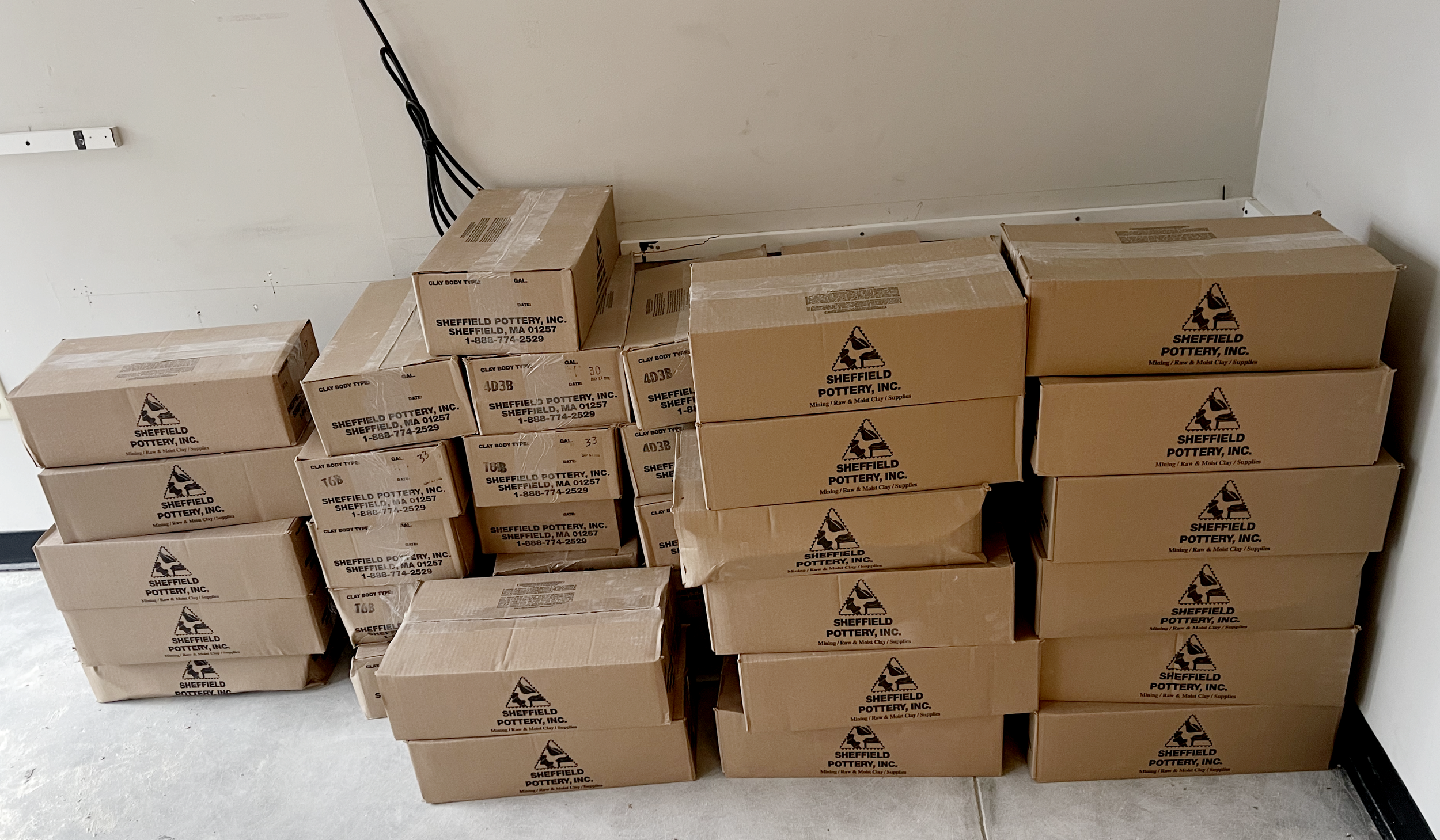
Firebox sells approved clay for $25 per sealed 25-pound bag, plus applicable sales tax. We do not divide or repackage clay into half bags.
Separating clay from tuition allows students to purchase the body suited to their class and avoids requiring a returning student to take another bag when compatible approved Firebox clay remains from an earlier course. That clay may be used again.
Adult students use Firebox-approved clay so that instructors know how the material behaves and the studio can protect shared kiln loads from unidentified or incompatible bodies. Each course identifies the clay body or selection process appropriate to its curriculum.
One Clear Price
A sealed 25-pound bag of approved Firebox clay is $25. Students know the price before registration, keep the clay they purchase, and can reuse compatible approved clay in a future Firebox course.
Standard Courses Include a Firing Allowance
Standard-format adult wheel, handbuilding, and mixed-methods courses include one standard bisque firing and one standard glaze firing for up to 20 pounds of bisqueware per enrolled student. The allowance applies across skill levels; an intermediate wheel student receives the same allowance as a beginning wheel student.
The allowance has no cash value, is not transferable, and expires at the end of the course. Work beyond the allowance is charged at the current studio firing rate.
Scale and Process Matter More Than Skill Level
A large vessel or substantial sculpture can occupy far more kiln volume than a group of ordinary course pieces even when the weights are similar. Raku and other specialist processes also involve different materials, handling, schedules, equipment, and risk.
For that reason, large-format and specialist courses state their own firing terms. Firing may be excluded, limited, or priced separately. Gabrielle LoTurco’s figure-sculpture courses, for example, do not include firing. Japanese-American Raku follows the terms published in its individual registration listing.
Youth and Family Courses Work Differently
Youth and Parent + Child courses use instructor-managed communal clay. The instructor portions clay according to the curriculum rather than issuing a personal 25-pound bag to each participant or family.
Communal clay, standard studio glazes, and standard firing for assigned class projects are included in tuition for these programs.
What Firebox Provides
Students should not need to arrive with a complete personal studio kit. Firebox provides the shared infrastructure needed for class:
- Basic class tools
- Pails and sponges
- Routine cleaning supplies
- Shared wheels, tables, and course-appropriate equipment
- Standard studio glazes approved for the course
- Appropriate work-in-progress storage
If a curriculum requires a specialized tool or project component, it is identified separately before class. Amy Saikia Wilson’s functional-sculpture course, for example, requires students to purchase pump and lamp components for the assigned projects.
Large Work Begins With a Conversation
Before beginning large or oversized work, members must discuss the proposed dimensions, construction, drying, handling, and firing plan with the studio manager or operations lead. This allows the studio to advise on workspace, kiln dimensions, handling requirements, and scheduling before substantial work begins.
Firebox cannot guarantee accommodation or firing of work that exceeds available workspace, handling capacity, or the usable dimensions of its kilns.
Where to Find the Terms for Your Course
Every course listing identifies its clay, firing, tool, and project-material terms. The registration listing is the best source for the exact course you are considering.
Explore Classes
Compare current courses, schedules, experience levels, and material terms on the Classes page.
Read the Governing Policy
Complete clay, glaze, firing, safety, and studio-use terms appear in the Studio Policies.
Clear policy is part of a well-run shared studio. The goal is not to make every course identical; it is to make the differences visible before a student enrolls.