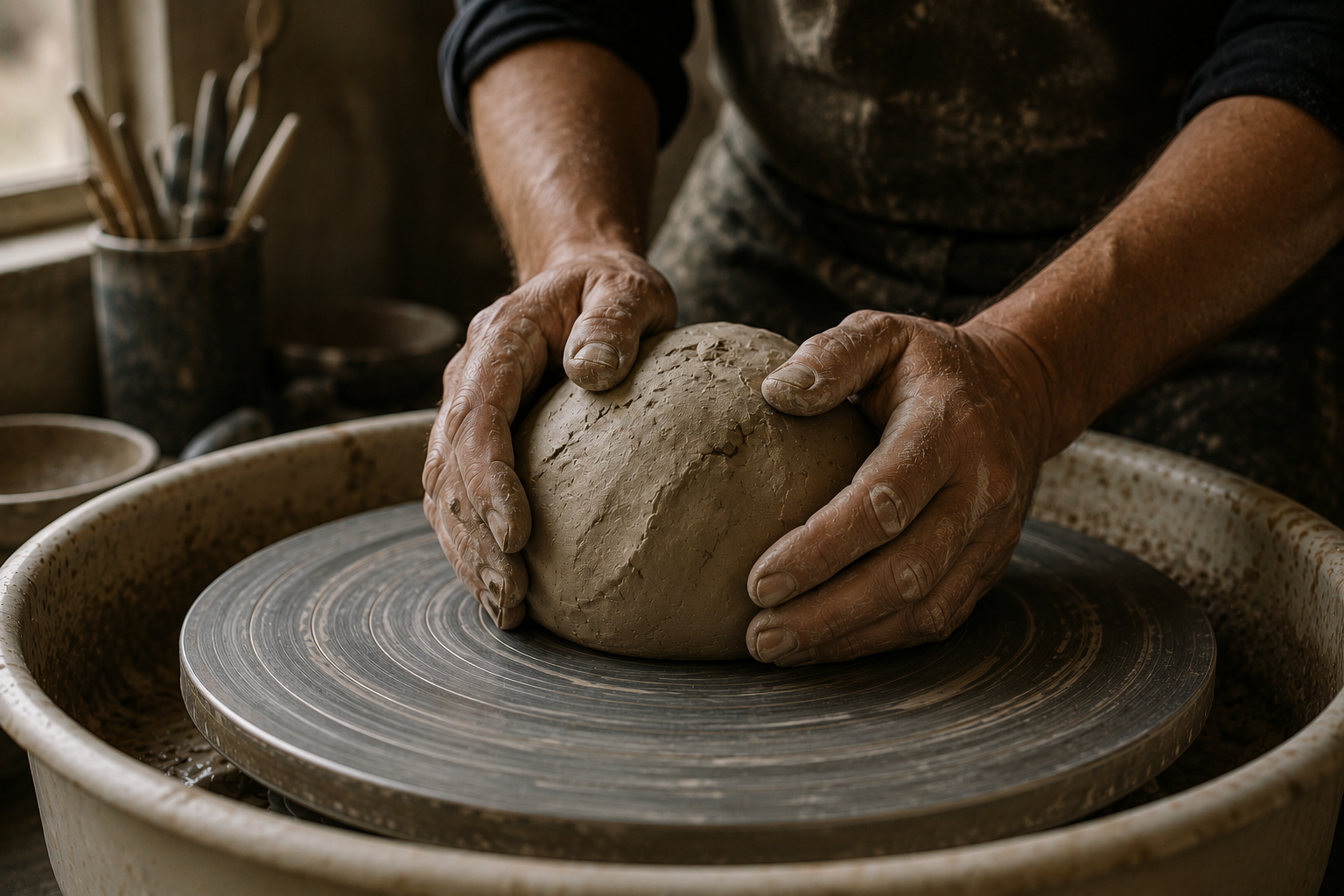
A year ago, Firebox did not exist as a building, a floor plan, or even a name. It started with a much smaller problem: I moved to the Boston area and couldn’t find the kind of ceramics studio I needed.
I was not looking for a one-time workshop. I was not looking to start from zero. I was looking for a real place to keep making pottery — somewhere with open studio hours, serious equipment, enough room to work, and a path to keep developing after the beginner stage. That search turned up plenty of interest in clay, but surprisingly few places built for sustained independent practice.
The Gap
Most studios I found sat on one side of a divide. Some were primarily class-based, with fixed sessions, limited open studio time, and a structure designed around instruction. Those spaces are valuable, especially for people entering clay for the first time. But they are not always designed for someone who already knows how to throw, wants regular access, or is beginning to treat their work more seriously. For many makers, selling a few pieces is a natural next step. Not every studio is built to support that transition.
The other option was to set up a private studio at home. That solves the access problem, but only by asking one person to take on the full cost of wheels, kilns, ventilation, shelving, materials, utilities, and space. For most serious hobbyists and emerging makers, that is not realistic. And certainly not possible for people living in apartments or shared housing. Try asking your landlord to upgrade the electricity to 240V.
I also found that, for many people, continued access to clay still runs through classes. Classes run on a schedule. A four-hour build, a slow trimming session, or a piece that needs one more adjustment does not always fit neatly into that structure.
That missing middle is the gap Firebox is being built to fill.
What Firebox Is Instead
Firebox is a ceramics makerspace, not just a class studio. That means structured classes for people entering the craft for the first time, alongside independent studio access for people who already have the skills and need room, equipment, material systems, and time. The same studio should be able to support someone taking their first wheel-throwing class and someone who has been making pots for years but does not want to build a private studio at home.
That range is the point. A studio built only for beginners gives people nowhere to go once they start improving. A studio built only for experienced makers closes the door to people who could grow into the craft. Firebox is designed to hold both: a place where someone can begin in a class and keep working as their practice becomes more serious.
Why It Matters
For beginners, that means a class is not a dead end. It is the start of a longer path. For experienced makers, it means access without waiting indefinitely for a rare open slot somewhere else. The goal is simple: more time with clay, better tools, clearer systems, and fewer unnecessary barriers between a maker and their work.
The difference between a class-based ceramics studio and an independent-access studio comes down to what happens after the last scheduled session. A class studio teaches technique on a fixed calendar. An independent-access studio gives members the equipment, space, and responsibility to keep developing on their own schedule.
Firebox is being built to do both.
Current Stage
Building The Foundation
Follow the build as Firebox moves from idea, to space, to working studio — one brick at a time.
Get Studio Updates