Choosing Studio Supplies: Clay
Building Firebox
Choosing Clay for the Way We Teach
Before selecting Firebox’s opening clay bodies, we asked our instructors which materials had worked well in their own studios and classrooms. Their experience is helping us build a clay offering around how people will actually learn and make.
Clay is not a neutral starting point. A body that feels responsive and forgiving on the wheel may not have enough structure for a large sculpture. A heavily grogged clay that supports thick construction may frustrate someone learning to pull their first cylinder. Color, texture, plasticity, and glaze response all shape a student’s experience.
Our instructors’ recommendations reflect years of helping students throw, handbuild, sculpt, and develop their own approaches to surface and form. Some favored versatile bodies that help beginners build confidence. Others identified clay suited to larger construction, detailed sculpture, rich surface treatments, or more experienced makers.
The result is an opening selection designed around the way Firebox will be used—and around giving instructors the materials they need to help students succeed.
Two Massachusetts Suppliers
Firebox is sourcing its opening clay bodies from two Massachusetts companies: Amherst Potters Supply in Hadley and Sheffield Pottery in Sheffield.
Working with both suppliers gives us access to a thoughtful range of materials while allowing our team to compare similar classes of clay in Firebox’s own Cone 6 electric-firing system. The bodies are not assumed to be interchangeable. That is something we intend to test and document.
The Opening Clay Bodies
White Stoneware
An approachable general-purpose body planned for wheel throwing, handbuilding, and foundational classes.
W1A
A bright white, porcelaneous stoneware for wheel throwing and smaller-scale handbuilding. Its white fired surface offers a useful ground for glazes and underglazes.
Toast Brown
A warm brown option for wheel work, handbuilding, functional forms, planters, and projects such as bonsai containers.
T6B
A lightly speckled buff body containing fine grog. It is suited to wheel work and handbuilding, with additional structure for somewhat larger forms.
4D3B
A dark stoneware with fine grog for medium-to-large wheel work and responsive handbuilding. In oxidation, Sheffield describes its fired color as a rich dark red.
AA6 Domestic Porcelain
A smooth, white body for fine functional work, detailed forms, and porcelain-specific exploration. Instructors can help students decide when porcelain supports their goals.
Sculpture T-6
A grogged clay intended for handbuilding and sculpture, where tooth and structural support matter more than an especially smooth throwing surface.
Architectural Buff
A heavily grogged, light-buff body developed for large, thick, or architectural construction. It offers a very different working experience from the smoother wheel bodies.
Choice With Guidance
Offering several bodies does not mean students will be expected to navigate the selection alone. Instructors will recommend clay based on the techniques, scale, experience level, and learning goals of each class.
A beginning wheel student may need a responsive, forgiving stoneware. A figurative sculptor may need tooth and structural support. A maker focused on glaze and surface may care deeply about the color of the fired clay beneath the glaze.
The objective is not choice for its own sake. It is to give instructors appropriate materials for their classes and help each student choose a clay that supports what they are trying to learn and make.
Testing Before We Call Anything Interchangeable
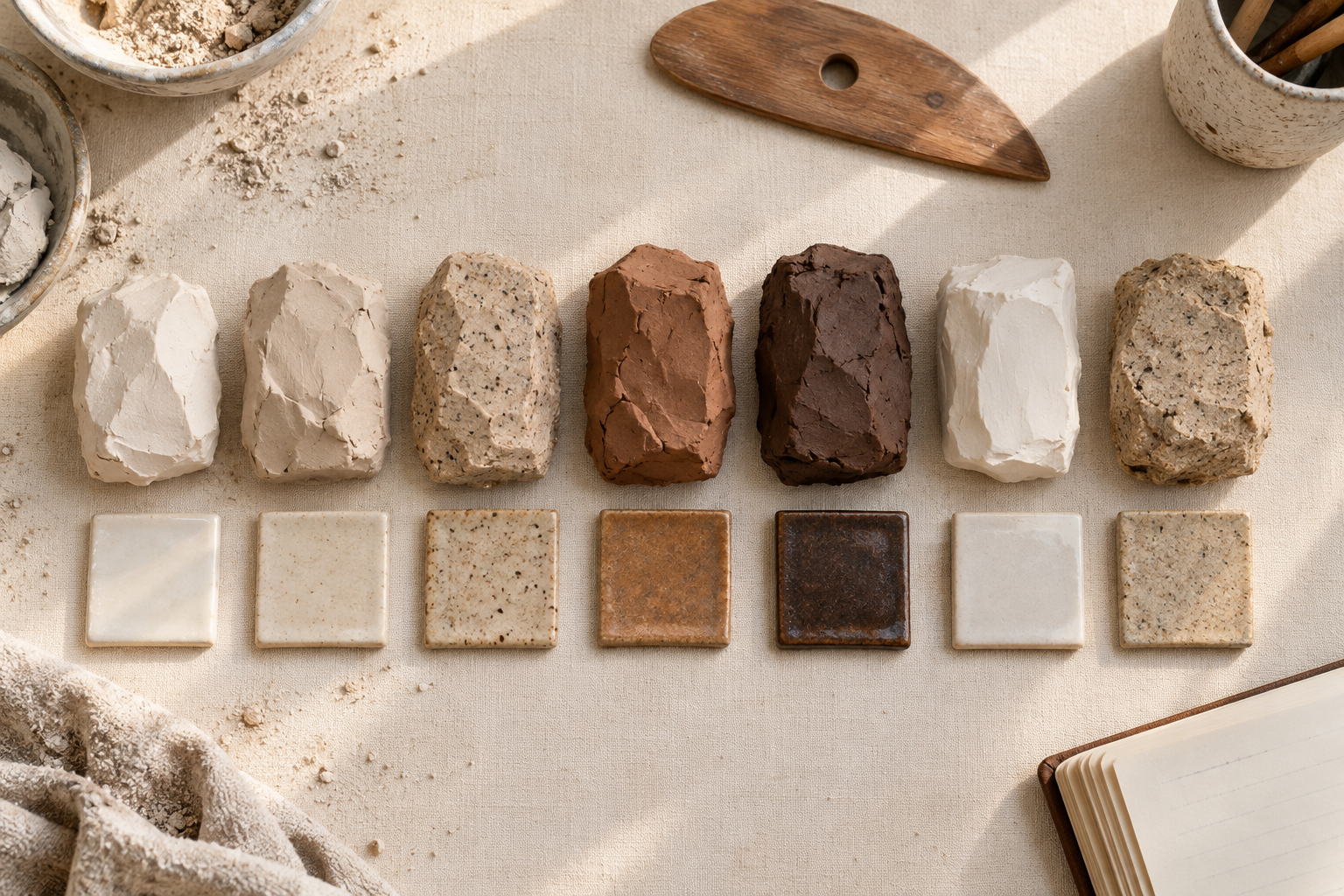
Bodies in the same general category are not necessarily identical. Two white stonewares may differ in plasticity, shrinkage, absorption, fired color, and glaze response. Two brown bodies may perform well in similar applications while producing very different finished surfaces.
We will make standardized test pieces from each clay, apply the same Firebox studio glazes at consistent thicknesses, and fire them using the same Cone 6 schedules. We will document:
- Fired clay color
- Glaze color and surface response
- Fit, crazing, crawling, and pinholing
- Shrinkage and warping
- Wheel-throwing and handbuilding behavior
- Suitability for different experience levels
This process will help us build a clay and glaze library based on observed results inside our own kilns. Over time, it will also help us understand which bodies can serve as practical alternatives when an individual product is temporarily unavailable.
Preparing for Opening
Our opening clay deliveries are expected before Firebox’s projected opening window. That gives our team time to receive and organize the materials, prepare test pieces, and begin evaluating the clay bodies with the studio glaze palette before students start working with them.
Choosing clay is one of the quieter parts of building a pottery studio, but it shapes nearly everything that follows. Thoughtful preparation now will help our instructors teach confidently and allow students to spend less time struggling with unsuitable materials—and more time learning, experimenting, and making.