Inside Firebox: A Room-by-Room Tour
Studio Journal
Inside Firebox:
A Room-by-Room Tour
Firebox follows the way ceramic work actually moves—from learning and forming to glazing, firing, storing, and sharing finished pieces.
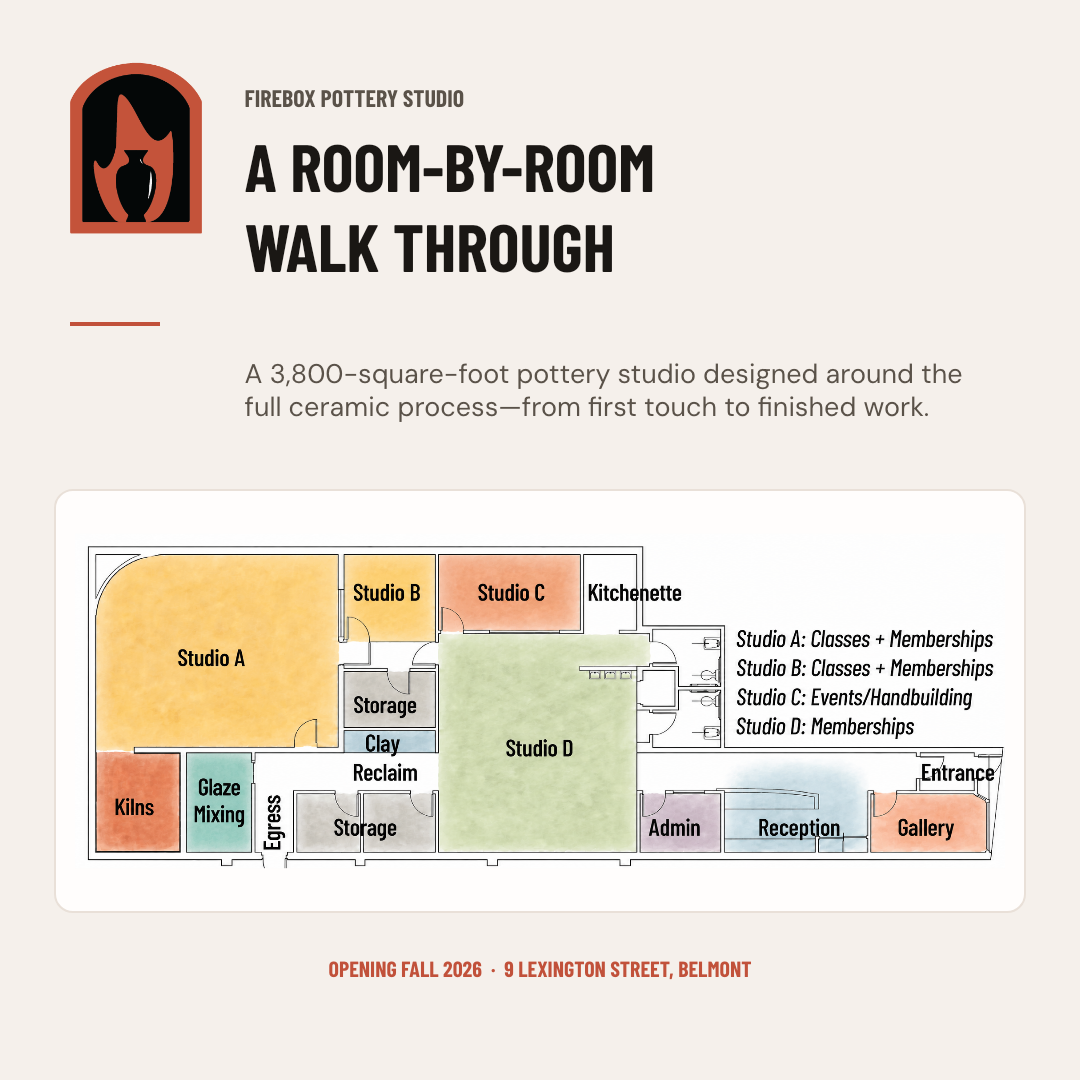
Ceramic work needs more than a wheel and a table. It needs room to learn, room to practice, reliable kilns and glazes, somewhere to store work in progress, and people around you who are doing the same thing.
Our roughly 3,800-square-foot studio at 9 Lexington Street in Belmont is laid out to follow the whole process—from a first time touching clay to pulling a finished piece out of the kiln.
Here's how each room fits in.
01 · Studios A + B
Where the learning happens
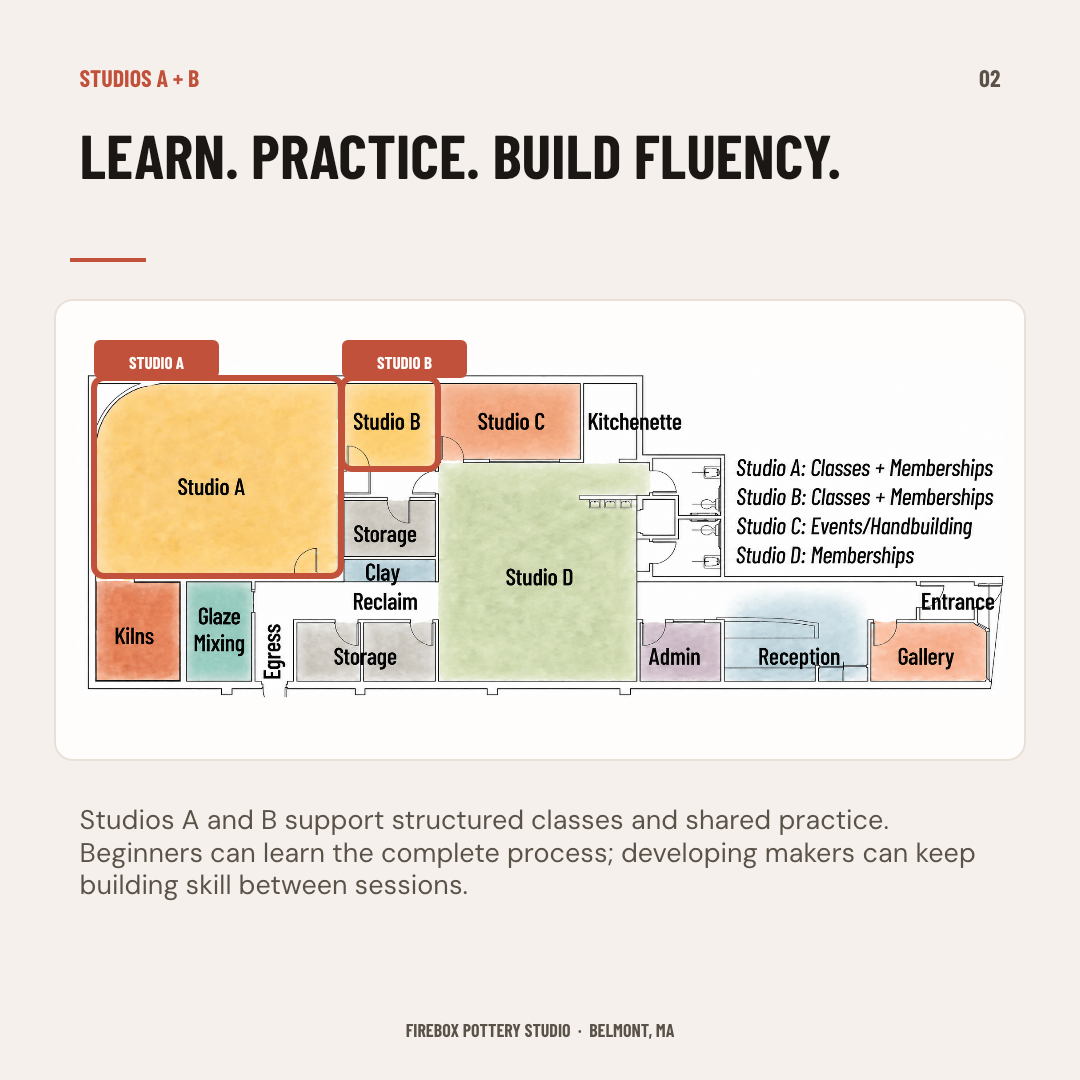
Studio A is the big class room space. This is where most people will first walk into Firebox—learning to center, throw, trim, build by hand, and start understanding how a piece moves from wet clay through glazing and firing.
Classes cover wheel throwing, handbuilding, and mixed methods—for beginners and for people looking to learn new techniques. There's room to work at your own pace, get individual attention, and come back to practice between sessions when the schedule allows.
Outside of class hours, members can use these rooms too, so the space stays active throughout the day.
02 · Studio C + Kitchenette
Make together
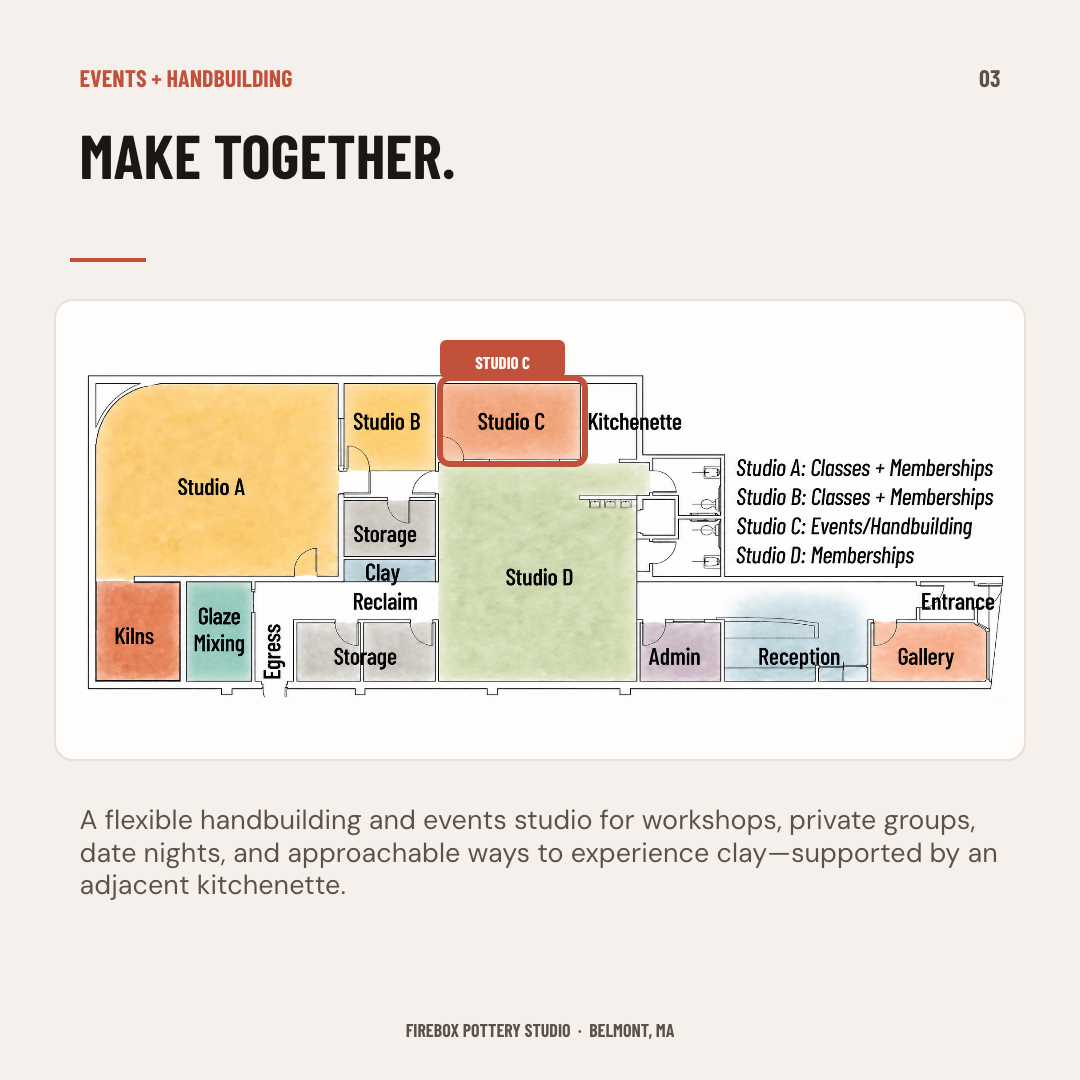
Studio C is the flexible room—workshops, private groups, date nights, community programs, and one-off ways to get your hands in clay without signing up for a full course.
Not everyone's first encounter with ceramics is a semester-long class. Sometimes it's an evening making a mug with a friend, a team gathered around a shared table, or a program built for a specific group.
There's an adjacent kitchenette, which lets this room handle longer workshops and social events while keeping food and drink away from the clay and glaze areas.
03 · Studio D
A home for independent practice
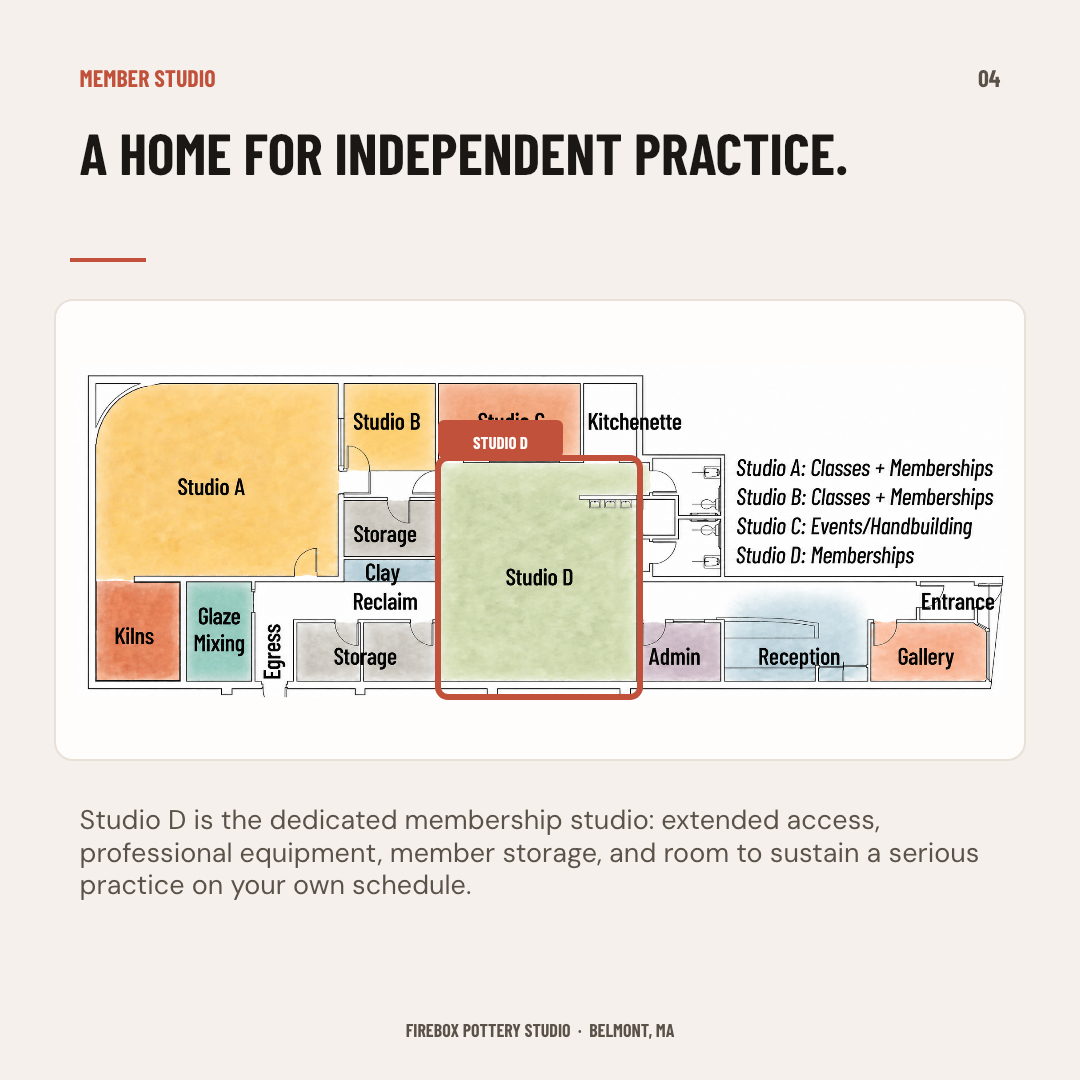
Studio D is the membership studio—reserved for experienced makers who can work safely on their own and want a real place to sustain a practice, not just occasional open-studio hours.
Members get extended access to professional wheels, handbuilding workspace, a house Cone 6 glaze library, and personal storage. As a dedicated members-only space you can keep working on your own schedule instead of waiting for Studio A to open up.
For a lot of ceramicists, continuity is the difference between signing up for another class and actually developing a studio practice. That's what this room is for.
04 · The Technical Core
The work continues after making
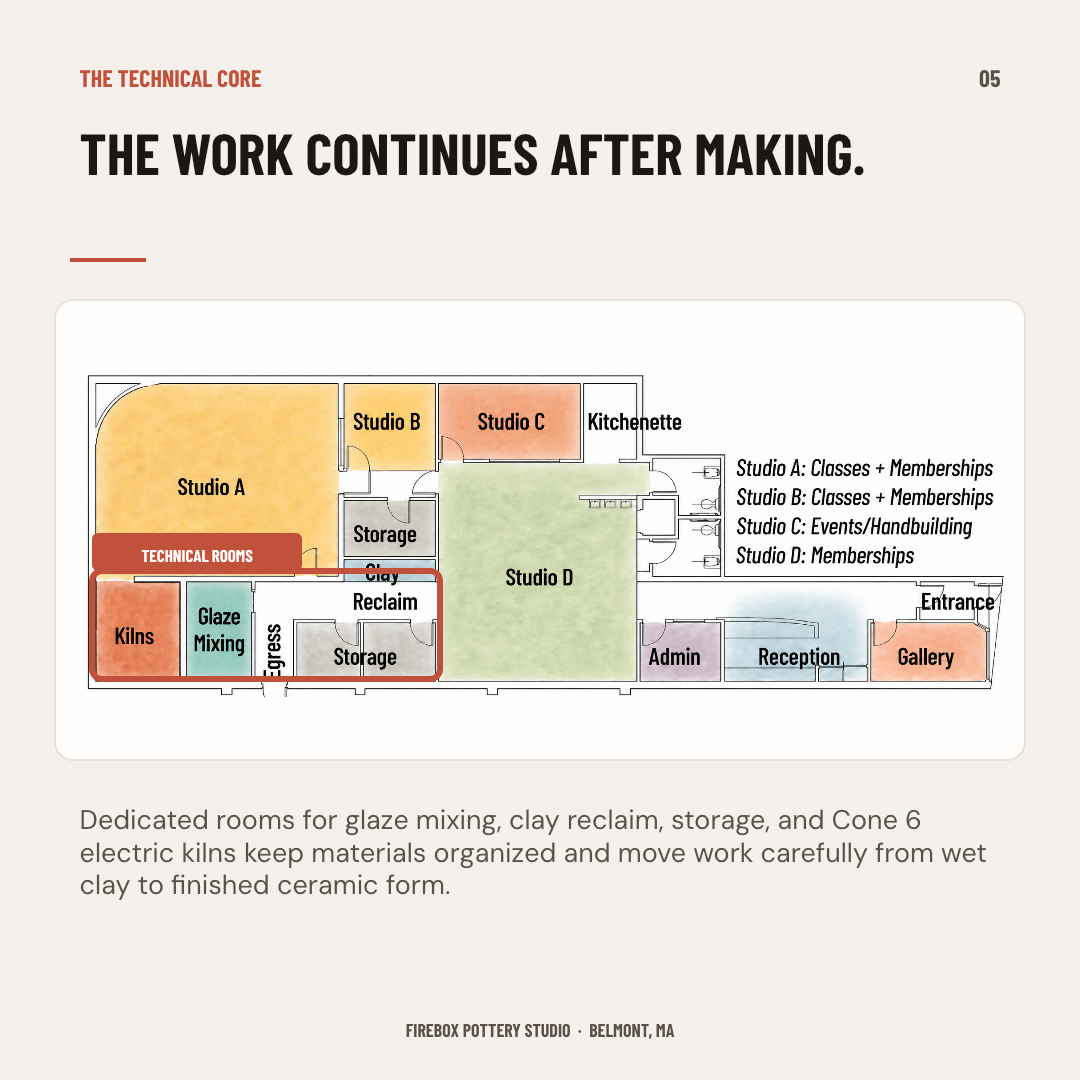
A lot of ceramic work happens after you step away from the wheel or the table. Behind the scenes, clay has to be managed, glazes have to be mixed, tested, labeled, and maintained. Pieces have to be tracked as they dry, go through bisque, get glazed, and return to the kiln.
Firebox gives each of these functions its own room: glaze mixing, clay reclaim, storage, and a kiln room with Cone 6 electric kilns. Keeping them separate means cleaner materials, less contamination, and technical work that doesn't interrupt classes or studio time.
The glaze room is set up for mixing, testing, and maintaining studio glazes. The reclaim area keeps usable clay cycling back instead of going to waste. Storage holds materials, tools, and work in progress. And the kiln room does what kiln rooms do.
These rooms enable the behind-the-scenes work to happen efficiently, but they're the backbone of the whole operation.
05 · Reception + Gallery
The front door
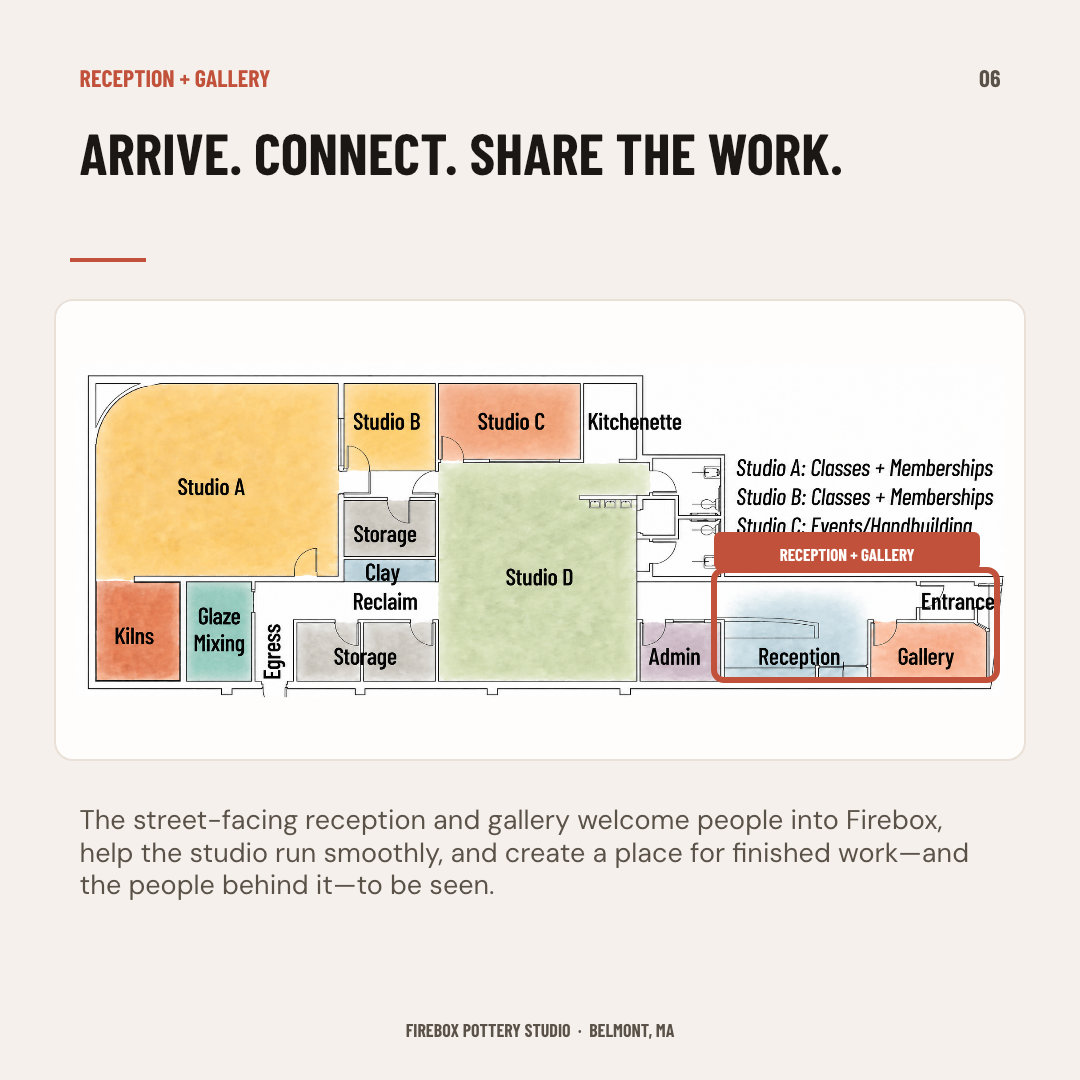
The Lexington Street entrance opens into a reception and gallery facing Waverley Square—the arrival point for students, members, event guests, and neighbors walking by.
Reception is where people get oriented, pick up finished work, and connect with classes, memberships, or events. The gallery puts finished pieces on display and gives the makers behind them a place to be seen.
You spend a lot of time alone with your work. The gallery is the part where other people finally get to see and buy it.
A Complete Studio System
A welcoming place to begin.
A serious place to keep going.
Every room has a specific job, but they work as one system. You can walk in through a class or an event, get better, move into independent practice, and keep making—with the kilns, glazes, and infrastructure to back it up.
Firebox Pottery Studio opens Fall 2026 at 9 Lexington Street in Belmont, Massachusetts.